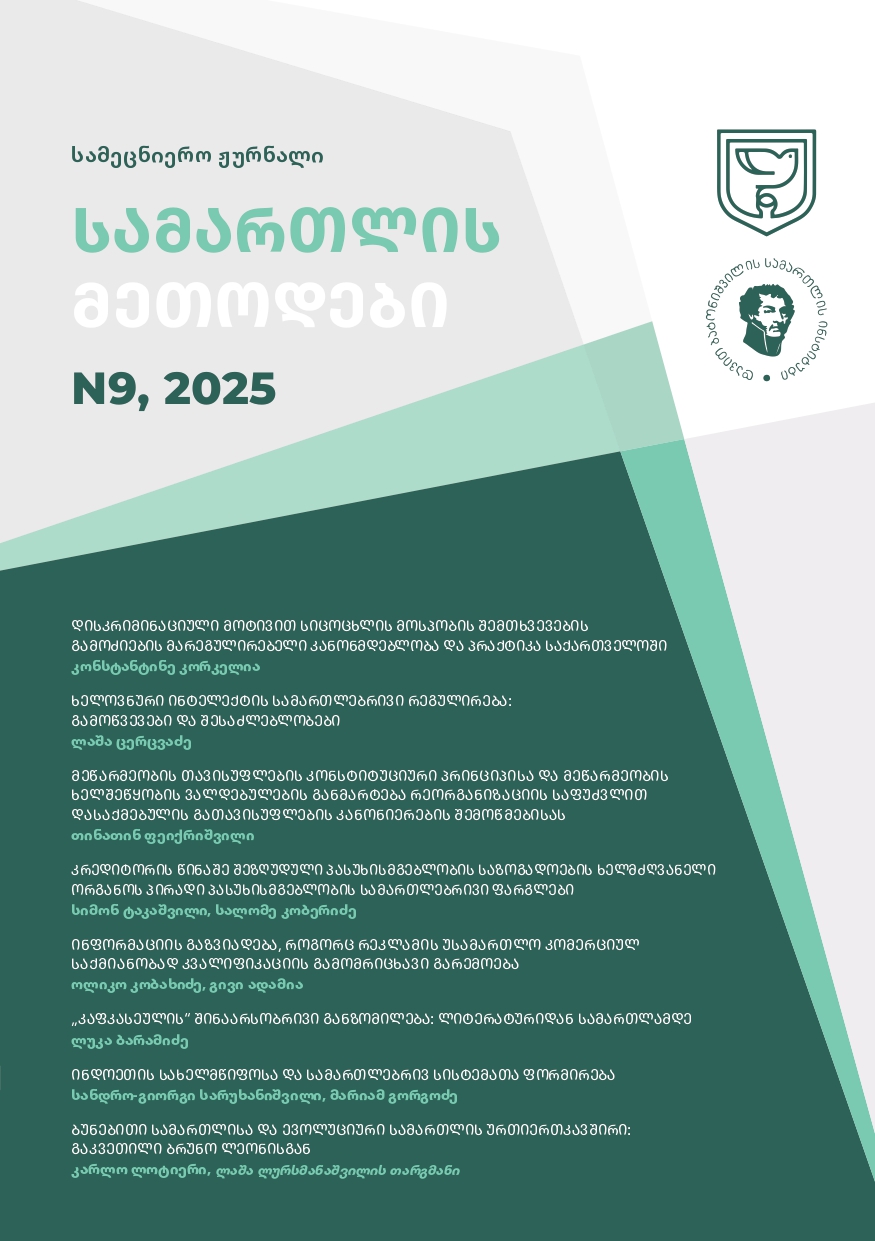
ᲮᲔᲚᲝᲕᲜᲣᲠᲘ ᲘᲜᲢᲔᲚᲔᲥᲢᲘᲡ ᲡᲐᲛᲐᲠᲗᲚᲔᲑᲠᲘᲕᲘ ᲠᲔᲒᲣᲚᲘᲠᲔᲑᲐ: ᲒᲐᲛᲝᲬᲕᲔᲕᲔᲑᲘ ᲓᲐ ᲨᲔᲡᲐᲫᲚᲔᲑᲚᲝᲑᲔᲑᲘ
DOI:
https://doi.org/10.63410/20251204/01საკვანძო სიტყვები:
AI, Regulation, European Union, Georgia, Law and Technologyანოტაცია
Using comparative legal analysis, this article examines the necessity and feasibility of regulating artificial intelligence (AI) in contemporary law. It asks whether comprehensive and effective AI regulation is achievable given the technology’s complexity and rapid evolution. The European Union is identified as a frontrunner, having adopted two major instruments that together establish ex ante and ex post regulatory frameworks. By contrast, most developed jurisdictions have yet to enact AI-specific legislation, though early initiatives indicate growing recognition of the need for legal oversight. The article critically evaluates proposals to grant legal subjectivity to AI, concluding that such an approach presents significant legal risks and is neither necessary nor advisable.
In Georgia, where no dedicated AI framework currently exists, the article outlines potential regulatory models and offers recommendations on core issues to guide the development of national AI legislation.
Downloads
ჩამოტვირთვები
გამოქვეყნებული
როგორ უნდა ციტირება
გამოცემა
სექცია
ლიცენზია
საავტორო უფლებები (c) 2025 LASHA TSERTSVADZE

ეს ნამუშევარი ლიცენზირებულია Creative Commons Attribution-ShareAlike 4.0 საერთაშორისო ლიცენზიით .